I Read 50 Negative Sleep Supplement Reviews So You Don’t Have To
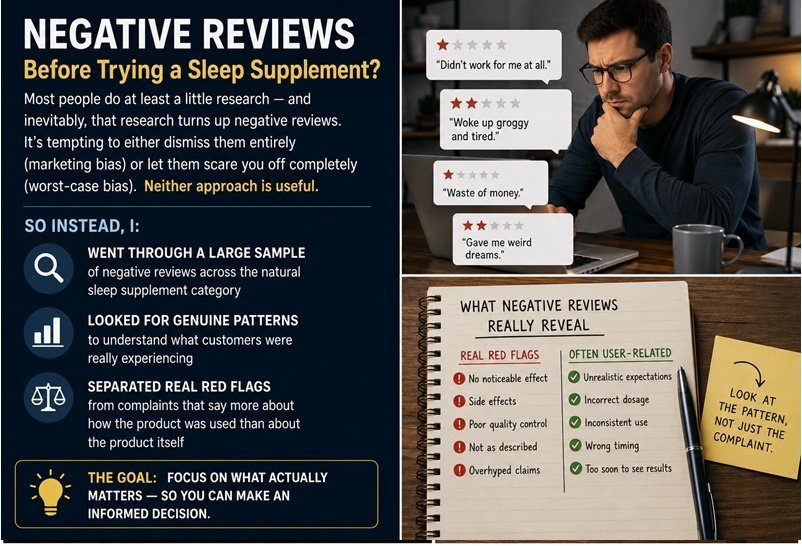
Before trying a new sleep supplement, most people do at least a little research — and inevitably, that research turns up negative reviews. It’s tempting to either dismiss them entirely (marketing bias) or let them scare you off completely (worst-case bias). Neither approach is particularly useful. So instead, I went through a large sample of negative reviews across the natural sleep supplement category — not specific to any one brand — looking for genuine patterns, to separate real red flags from complaints that say more about how the product was used than about the product itself.
The Complaint That Showed Up Most Often: “It Didn’t Work”
By far the most common complaint, appearing in some form across the vast majority of negative reviews, was a version of “I took it, and nothing happened.” Digging deeper into these reviews, a pattern emerged: a large share of them described trying the product for only two or three nights before giving up.
This matters because most natural, multi-ingredient sleep formulas — including ones built around circadian rhythm support (melatonin, red tart cherry extract) combined with nervous system calming ingredients (GABA, L-theanine) — are not designed to work like a sedative on night one. They’re designed to build cumulative effects over one to several weeks. A three-night trial simply isn’t long enough to fairly evaluate whether this category of product works, regardless of brand.
Verdict: Often a mismatch between product design and user expectations, not necessarily a product failure.
The Second Most Common Complaint: “I Felt Groggy the Next Day”
This complaint appeared frequently enough to take seriously, but the details mattered. In a significant share of these reviews, the person mentioned taking the supplement right before falling asleep rather than the recommended 30 minutes beforehand, or taking it notably later than their intended bedtime — sometimes describing taking it and then staying up scrolling their phone for another hour or more.
Grogginess complaints were also disproportionately common among reviews describing higher-than-recommended doses, sometimes deliberately taken in hopes of a stronger effect.
Verdict: A mix of genuine individual sensitivity (which does happen and is worth taking seriously) and, in many cases, dosage or timing errors that would predictably cause next-day grogginess regardless of formula quality.
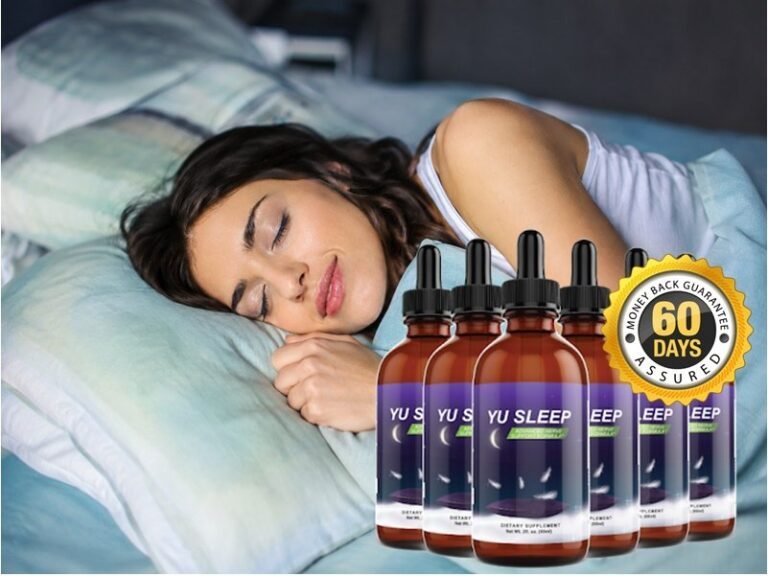
Find out how YuSleep helps you have a good sleep!
The Third Pattern: Price Complaints
A reasonable chunk of negative reviews weren’t really about effectiveness at all — they were about value perception. Complaints like “too expensive for what it is” appeared often, generally from people comparing a multi-ingredient formula’s price against a basic single-ingredient drugstore melatonin product, without necessarily accounting for the difference in formulation complexity or ingredient sourcing.
Verdict: A legitimate personal budget consideration, but not really a quality or safety red flag — more a mismatch between expectations and what a premium, multi-ingredient formula actually costs to produce compared to a basic single-ingredient product.
The Pattern Worth Taking Seriously: Reported Digestive Discomfort
A smaller but consistent subset of negative reviews across the category mentioned mild digestive discomfort, particularly in the first few nights of use. This tracks with what’s generally understood about ingredients like 5-HTP and red tart cherry extract, which can occasionally cause mild stomach upset in sensitive individuals, especially when taken on an empty stomach.
Verdict: A real, if generally mild and temporary, side effect worth being aware of — and a reasonable argument for starting with a lower dose if you have a sensitive stomach.
The Rarer, More Serious Complaints
A small number of reviews across the broader category described more concerning experiences — significant dizziness, unusual reactions, or symptoms that warranted medical attention. These were a distinct minority, but worth acknowledging rather than dismissing. They’re a reminder that any biologically active supplement, however well-formulated and generally well-tolerated, can occasionally cause an individual reaction that isn’t representative of the typical experience.
Verdict: Rare, but real. This is exactly why checking with a doctor before starting any new supplement — particularly if you’re on medication or have an existing health condition — remains genuinely important, not just a boilerplate disclaimer.
What This Analysis Doesn’t Tell Us
It’s worth being upfront about the limits of this kind of review analysis. Online reviews are not a controlled study — people who have negative experiences are often more motivated to leave a review than people with a mildly positive or neutral experience, which skews the sample toward complaints. Reviews also can’t fully verify how carefully someone followed dosage and timing instructions, or rule out other factors (poor sleep hygiene, high stress, medication interactions) that might have limited a product’s effectiveness independent of the formula itself.
The Honest Takeaway
After going through a large sample of negative reviews across this product category, the most common theme wasn’t “the ingredients don’t work” — it was “the product wasn’t given a fair, correctly-used trial.” Complaints rooted in incorrect timing, insufficient trial length, or unrealistic expectations for an instant effect made up the clear majority. Genuine, unavoidable side effects existed but were a smaller minority, and severe reactions were rarer still.
This doesn’t mean every negative review should be dismissed — some reflect legitimate individual sensitivity or genuine value concerns. But it does mean that a pile of negative reviews isn’t automatically evidence that a well-formulated natural sleep supplement doesn’t work. Often, it’s evidence that the category as a whole is misunderstood — people expect a sedative-like instant effect from a formula designed to work more gradually, with your body’s own systems, over several weeks.
How to Use This When Researching Any Sleep Supplement
Next time you’re reading reviews for a product like YuSleep, or any natural sleep formula, it’s worth reading with a slightly more critical eye than usual:
- Look for the trial length mentioned. A negative review after 2–3 nights carries less weight than one after a genuine 3–4 week trial.
- Look for dosage and timing details. Reviews mentioning “I took extra” or “I took it right when I got in bed” often explain their own disappointing results.
- Separate value complaints from efficacy complaints. “Too expensive” and “didn’t work” are different issues, even when they show up in the same review.
- Take rare, serious complaints seriously, even if they’re the minority — they’re a reminder to check with a doctor before starting, particularly if you’re on medication.
Final Thoughts
Reading through a large sample of negative reviews across the natural sleep supplement category turned up far fewer genuine red flags than the sheer volume of complaints initially suggested. Most negative experiences traced back to how the product was used — too short a trial, incorrect timing, unrealistic expectations — rather than a fundamental flaw in well-formulated, multi-ingredient approaches. That doesn’t mean every product in this category is equally well-made, but it does mean a fair evaluation requires reading past the headline complaint and into the details of how the reviewer actually used the product.
Find out how YuSleep helps you have a good sleep!
These statements have not been evaluated by the FDA. This product is not intended to diagnose, treat, cure, or prevent any disease. Individual results and tolerability vary.